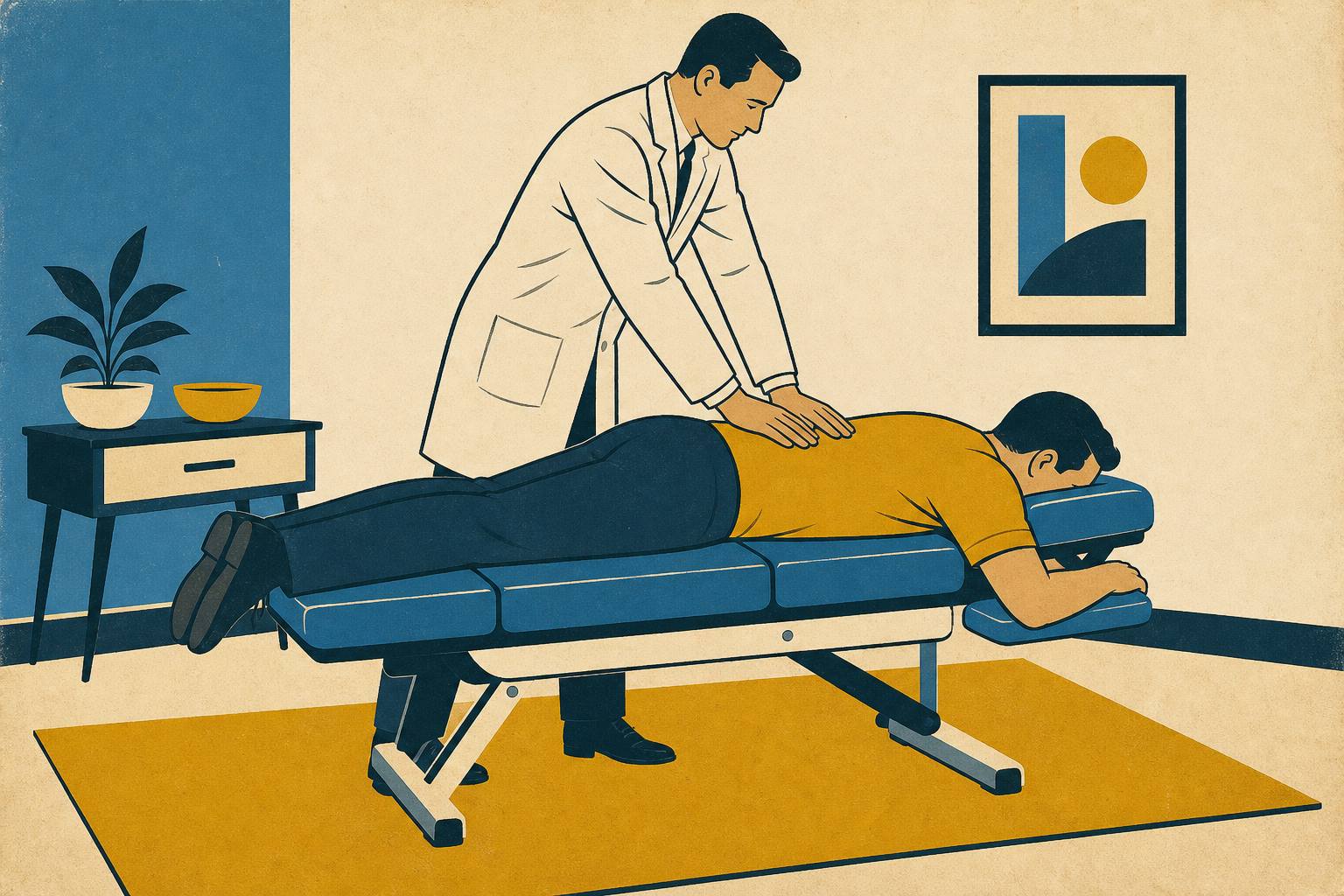
Chiropractic adjustment
The everyday visit. A specific, hands-on diversified adjustment to the joint that is not moving, usually the lower back or the mid-neck. Most adjustment visits run about twenty minutes door to door, which is why people book them on a lunch break.
- Quick recheck of the joint before anything is moved
- Hands-on adjustment, one or two segments
- Heat or ice afterwards if the muscle is angry
- About 20 minutes
Best for: joints that have been examined here before
Low-force and drop-table care
Nothing twists and nothing cracks. A weighted section of the table drops a fraction of an inch under the joint, or a hand instrument delivers the same push in a much smaller dose. This is the version used for thinner bones, hip and knee replacements, and anyone who has spent a week dreading the appointment.
- Drop-table or hand-instrument adjusting
- No rotation of the neck
- Suitable after joint replacement
- About 25 minutes
Best for: seniors, osteoporosis, nervous first-timers
Sciatica and disc care
When the pain has left the back and moved into the leg, the disc gets treated before the joint. Slow mechanical traction opens the space the nerve is complaining about, then adjusting and muscle work keep it open. We test the nerve at every visit so progress is measured rather than assumed.
- Neurological testing at each visit
- Mechanical traction / decompression
- Adjusting once the nerve settles
- About 35 minutes
Best for: leg pain, numbness, pins and needles below the knee
Neck, jaw and headache work
Screen posture, night clenching and old whiplash all end up in the same three joints at the base of the skull. Care here mixes gentle upper-neck adjusting with jaw and suboccipital muscle work, plus a short list of things to change at your desk. Headache patients often notice the difference before the neck stiffness fully goes.
- Upper cervical and jaw assessment
- Suboccipital muscle release
- Desk and pillow adjustments to make at home
- About 30 minutes
Best for: tension headaches, stiff necks, jaw clenching
Prenatal and pediatric visits
Pregnancy shifts the pelvis long before the belly shows, and side-lying positioning with a pregnancy pillow keeps care comfortable into the third trimester. For children the visit is mostly conversation and observation — posture, backpack weight, how they sit to do homework — with very light contact if anything needs it.
- Side-lying pregnancy positioning
- Pelvic and low-back care through all trimesters
- Backpack, posture and desk checks for school age
- About 40 minutes for a family slot
Best for: pregnancy back pain, growing kids, family bookings
Auto and work injury care
Rear-ended on Rockaway Turnpike or hurt lifting at work, the treatment is only half the job — the forms are the other half. No-fault and workers' compensation paperwork is completed in this office rather than handed to you as homework, and the notes go out the way carriers expect them.
- Documented injury examination
- No-fault (NY PIP) and comp paperwork handled here
- Reports written for the carrier and the attorney
- About 45 minutes for the first visit
Best for: car accidents, lifting injuries, insurance claims
Wellness plans
Once the pain is gone, some people stop and some people keep a spaced visit on the calendar because their job or their sport keeps putting the joint back. A wellness plan is simply that schedule, written down with a cost, reviewed every few months and cancelled the moment it stops earning its place.
- Spaced maintenance visits, monthly or seasonal
- Written schedule with a plain price
- Reviewed and re-measured every third visit
- About 25 minutes
Best for: recurring problems, physical jobs, weekend athletes